




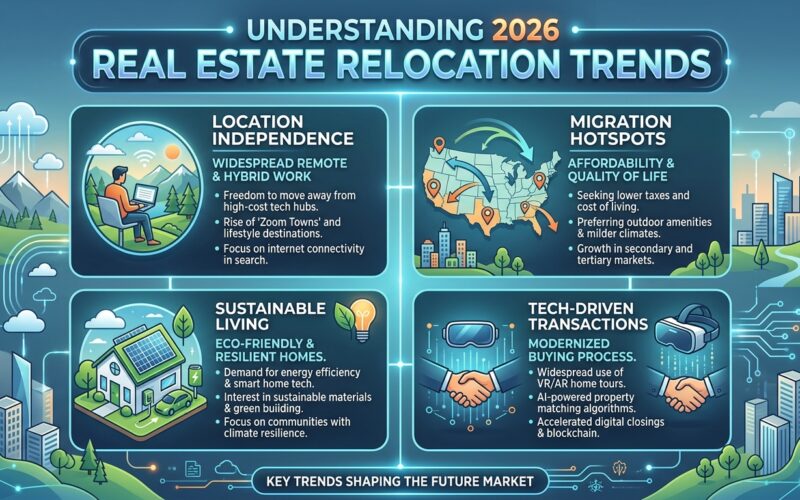
In 2026, the real estate landscape is experiencing significant transformations, influenced by evolving relocation patterns. Understanding these trends is crucial for both buyers and sellers aiming to navigate the market effectively. For those seeking expert guidance in this dynamic environment, Mandeville real estate agent Allison Vencil offers comprehensive services. With offices in Mandeville, New Orleans, and Bay St. Louis, Allison provides personalized assistance to clients across Louisiana and Mississippi, helping them make informed decisions in the ever-changing real estate market.
Proximity to Family and Affordability Drive Moves
A 2026 NAR report shows that 30% of movers cite being closer to family and friends as their main reason for relocating, while 21% seek better value. This highlights the importance of personal ties and financial factors in home decisions. These motives reflect a growing awareness that where people live impacts their well-being. Buyers focus more on quality of life, good schools, and community, making relocation more holistic. Family proximity offers emotional and practical benefits, such as shared childcare or eldercare, and influences many households. Meanwhile, affordability remains key, especially for first-time buyers and those looking to maximize investment. As city prices rise, buyers increasingly look to suburban and rural areas for housing options previously ignored.
The South Leads as a Top Destination
The same NAR report highlights that 46% of recent movers chose the South as their new home, attracted by its affordability and warmer climate. This trend reflects a broader shift towards regions offering a higher quality of life at a lower cost.
States such as Texas, Florida, and the Carolinas have experienced sustained population growth. Lower property taxes, a relative abundance of land, and economic growth are fueling these migration patterns. Cultural attractions, diverse cuisine, and an emphasis on hospitality have also made Southern cities increasingly attractive to both families and young professionals. The Sun Belt region, in particular, continues to draw those looking to escape harsh Northern winters and congested urban centers, further reinforcing the South’s allure in the national migration narrative.
Remote Work Influences Location Preferences
The rise of remote work has allowed individuals to prioritize lifestyle over proximity to the workplace. Many are now choosing homes in suburban or rural areas that offer more space and a better quality of life, without the constraint of daily commutes.
This shift has also prompted a surge in demand for properties with dedicated office spaces, upgraded broadband connectivity, and access to nature or recreational amenities. As organizations continue to embrace hybrid and fully remote arrangements, some experts predict that this fundamental change in work culture will remain a defining feature of the housing market for years to come. Notably, this flexibility allows entire households to consider locations that previously would not have been viable due to lengthy commutes or lack of urban employment opportunities, thereby decentralizing urban growth and revitalizing smaller towns.

Technological Advancements Reshape the Relocation Process
Technology is playing a pivotal role in modern relocations. Virtual home tours, AI-driven logistics, and blockchain-based documentation are making the moving process more efficient and transparent, catering to the needs of tech-savvy buyers.
For buyers, these innovations mean a more streamlined house-hunting process. Virtual tours allow families to remotely explore properties across state lines, narrowing choices before incurring travel costs. AI-powered search tools can match users with homes that meet their unique needs more quickly, while blockchain solutions promise greater security and transparency for transactions. Meanwhile, smart home technology, such as remote-controlled security systems, thermostats, and appliances, is increasingly in demand, further influencing buyer preferences and the types of properties being listed.
Affordability Challenges Impact Local Moves
Rising home prices and limited inventory are making it harder to move within metro areas, especially in high-cost markets. Many are delaying moves until conditions improve, contributing to the mobility slowdown. This is especially true in major cities, where rapid price gains reduce the incentive to trade up or downsize. Safety nets from available inventory have disappeared, leading to increased competition and frustration for those hoping to upgrade or relocate. However, creative solutions like multigenerational living and remodeling are gaining popularity as families adapt their current homes.
Demographic Shifts Influence Housing Preferences
Millennials, now the largest group of home buyers, seek walkable neighborhoods, vibrant urban life, and sustainability. Baby boomers are downsizing or relocating for retirement, increasing demand for smaller homes in quieter suburbs or rural areas. This diversity prompts developers and city planners to redesign communities, emphasize green spaces, and support local businesses. Younger buyers avoid long commutes and environmentally taxing developments, preferring locations with sustainable infrastructure, energy-efficient homes, and multimodal transportation options. Older adults prioritize healthcare access, security, and proximity to leisure, boosting the popularity of master-planned retirement communities in urban and suburban areas.
Conclusion
Relocation trends in 2026 are shaping home-buying decisions, with factors such as proximity to family, affordability, remote work, technological advances, and demographic shifts changing the market. Staying informed is vital for strategic choices. Buyers and sellers must adapt to new demand and supply patterns. Partnering with a knowledgeable agent like Allison Vencil provides crucial local insights. Understanding migration trends and using digital tools are key to success in the evolving real estate sector.