




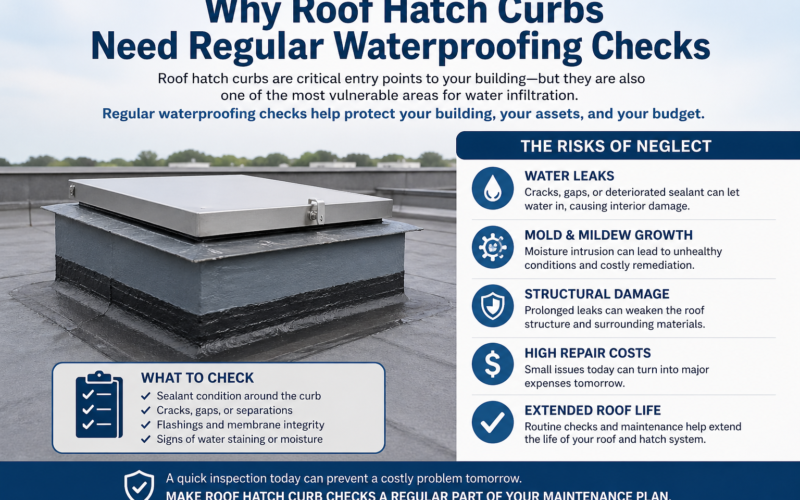
Most building owners spend plenty of time worrying about the main expanse of their roof, but completely forget about the small stuff. One of the most overlooked components is the roof hatch curb. If you are dealing with leaks or drafts, it might be time to call a roof repair sandy contractor to take a look at these critical transition points. These curbs act as the foundation for your access points, and when they fail, the damage usually starts small before becoming a massive headache.
The Vulnerability of the Curb
A roof hatch curb is essentially a raised frame that sits above the roof line to hold your hatch in place. Because it sticks out from the flat surface of the roof, it is constantly exposed to the elements from every single angle. Wind, rain, and snow do not just hit the top; they beat against the sides. Over time, the sealant and flashing that keep water out will start to degrade.
Because the curb is a joint where two different structures meet, it is naturally a weak spot. Materials expand and contract at different rates when the sun beats down on them. This constant movement can cause tiny cracks in the waterproofing layers. If you are not looking for them, you will never see them until you notice a puddle on the floor inside.
Why Flashing Fails
Flashing is the protective metal or membrane layer that bridges the gap between the roof surface and the vertical wall of the curb. It is the first line of defense against water intrusion. However, flashing is not invincible. UV rays from the sun are incredibly harsh and can turn flexible, waterproof membranes into brittle, cracking messes.
In many cases, the original installation might have been a bit rushed. If the corners weren’t sealed with surgical precision, water finds a way in. Once moisture gets behind that flashing, it gets trapped. This leads to rot in the wood or corrosion in the metal frame of the curb itself. Regular checks allow you to catch these tiny openings before they turn into a full-blown structural failure.
The Hidden Danger of Ponding Water
Flat roofs are notorious for having drainage issues if they are not sloped perfectly. Often, water will pool right against the base of a roof hatch curb. If your waterproofing is not up to par, that standing water will eventually find a microscopic hole to dive into.
Ponding water exerts constant pressure on the seals. Unlike a quick rainstorm that dries up, ponding water stays there for days. This saturates the materials and can lead to mold growth inside your ceiling or insulation. By checking these areas regularly, you can ensure that water is flowing away from the hatch rather than sitting against it like a ticking time bomb.
Protecting Your Interior Assets
The whole point of a roof is to keep the stuff inside dry. Think about what sits directly under your roof hatch. Usually, it is a ladder, expensive inventory, or heavy machinery. A leak coming through a hatch curb does not just damage the roof; it ruins whatever is underneath it.
Water dripping onto a metal ladder can cause rust, making it unsafe for your maintenance crew to use. Even worse, if the leak is slow, you might have a mold colony growing in the plenum space above your ceiling tiles without even knowing it. Checking the waterproofing on your curbs is a small price to pay compared to the cost of replacing ruined equipment or dealing with air quality issues.
Extending the Life of the Whole Roof
Roofing systems are expensive investments. Most people want to get twenty or thirty years out of a roof, but that only happens with proactive care. A failure at a hatch curb can actually compromise the rest of the roof. When water gets under the membrane at a curb, it can travel for dozens of feet, soaking the insulation underneath.
Wet insulation loses its R-value, which means your energy bills go up. It also becomes heavy and can cause the roof deck to sag. By keeping the curbs watertight, you are protecting the integrity of the entire system. It is much cheaper to apply a bit of new sealant or a patch of flashing than it is to tear up a large section of the roof because the insulation turned into a sponge.
Final Word
Staying on top of your maintenance schedule is the only way to avoid the nasty surprises that come with a leaky commercial building. If you suspect your hatch is letting in moisture, getting a professional roof repair sandy contractor to perform a thorough inspection is the smartest move you can make. It is easy to ignore the things we do not see every day, but your roof hatch curb is far too important to leave to chance. Taking care of it now ensures your building stays dry and your budget stays intact for years to come.