




In the U.S., there’s an average of about 4,500 boating accidents per year, resulting in nearly 3,000 injuries and around 660 deaths annually, according to the most recent U.S. Coast Guard data. Drowning accounts for the majority of boating accident deaths—about 76% of fatalities.
When someone is thrown into the water during a crash, the chances of rescue in time are often very low. Boating accidents can happen suddenly and often lead to serious injuries, property damage, and legal complications.
Whether caused by operator negligence, equipment failure, or hazardous conditions, knowing what to do immediately after an accident is critical for protecting your safety and your legal rights. Taking the right steps can make a significant difference in any insurance claim or legal action that follows.
If you are a boat operator and you wonder what you should do in case of a boating accident, read on. You need to learn accident procedures because they will help you protect yourself from legal and financial consequences.
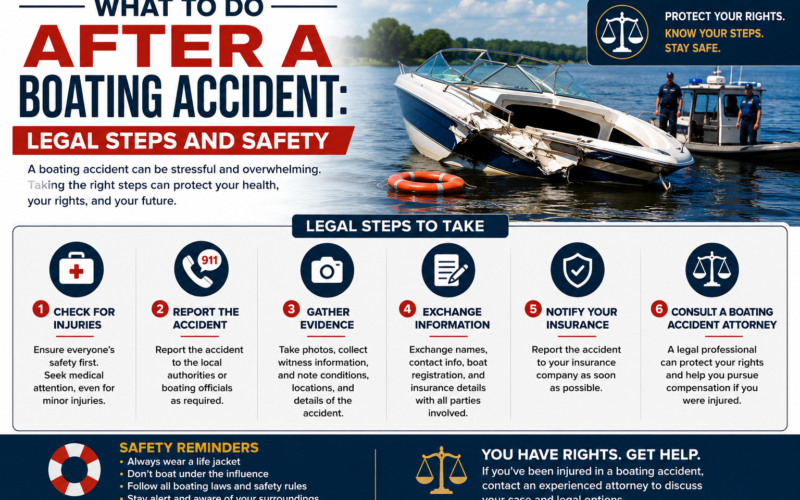
Here are legal steps you can take right after a boating accident happens.
Ensure Safety and Assess Injuries
The first action you need to take after a boating accident involves securing safety and treating all injuries that need immediate attention. You should check yourself and all passengers for any signs of injury. You must keep the injured person calm throughout your assessment of their medical state. If the situation allows, move to a secure location that exists away from the aquatic environment.
Personal injury lawyer Christopher Canlas states that any type of accident, including boating accidents, can result in people sustaining fatal injuries or life-threatening conditions. The process of securing the boat must be completed before any additional accidents occur.
You should treat minor injuries which include cuts and bruises, through the first aid kit that you keep on your boat. Emergency services should be contacted whenever someone suffers a major injury.
Report the Accident to Authorities
You must first secure safety for all people present before you can report the accident to local authorities, which include both law enforcement and Coast Guard officers.
You should notify authorities about any injuries or major property damages. You need to start the call immediately while you describe the incident and your current location and the number of people present and their injuries. The law requires people to pay fines when they do not submit mandatory reports.
The responding officers will create official records of the scene while they may question people who saw the events unfold. You should always work together with authorities while you give them any information they seek from you.
Gather Evidence and Documentation
You can begin evidence collection and documentation work for the boating accident after waiting for authorities to arrive.
The photographer needs complete visible documentation of the complete scene, which includes all boats that participated in the accident and all injuries that people suffered and all damage that occurred. The time and date and weather conditions need to be recorded at the exact moment when the event happened.
You should collect contact details from all witnesses because their statements will prove important at a later time. You need to keep your boat registration documents together with your insurance information and all required permits. This evidence will be crucial in supporting the ongoing investigative process, as well as any forthcoming judicial processes.
Contact Your Insurance Provider
You should contact your insurance company after you have collected all necessary documents together with essential proof. The accident report requires you to supply all needed details, including the time and place of the accident together with all injuries and damages that occurred.
You must prepare to present your collected evidence because it will assist in speeding up your claims process. Your insurance agent will assist you in understanding the upcoming steps while explaining which parts of your policy apply to your situation.
They might dispatch an adjuster to conduct a direct evaluation of the circumstances. You need to record all your communications with the insurance provider because it needs to be documented too. The documentation will become essential when any future disputes need resolution.
Consult With a Legal Professional
The proper course of action after a boating accident requires you to contact a maritime law expert who can provide you with legal help. The act of representing yourself during court cases constitutes an unwise decision.
Your legal rights and responsibilities become understandable through the assistance of a lawyer. Boating accident attorneys help their clients through three legal processes which include proving who is responsible and estimating damages and managing their insurance claims.
You need to seek legal advice because strict time limits exist for filing claims.