




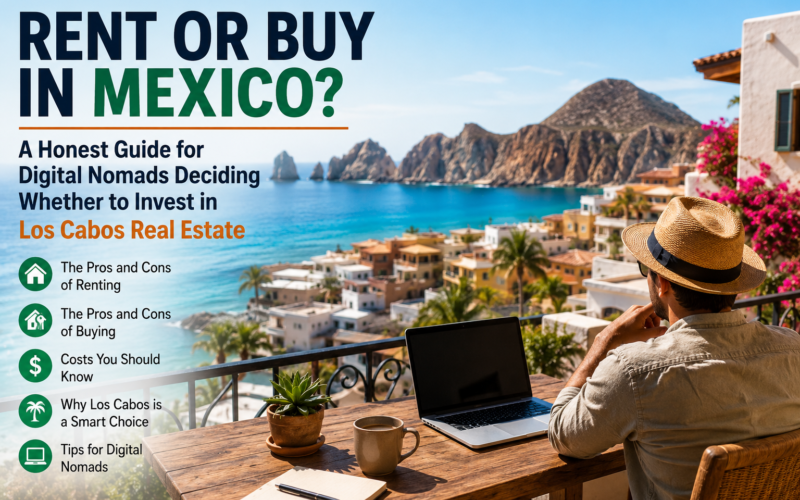
A surprisingly large number of remote workers who move to Mexico planning to stay six months end up still there three years later. Some have built real wealth in that time. Others locked into a purchase too early, in the wrong city, and spent those same three years quietly regretting it.
The difference between those two outcomes usually comes down to timing, location, and an honest read of your own lifestyle. This guide is for the nomad or remote worker who is genuinely weighing the rent-or-buy question, not as a financial abstraction, but as a real decision with real consequences in a foreign country.
Why Mexico Complicates the Usual Rent-vs-Buy Math
The standard rent-vs-buy calculation looks at monthly rent, mortgage costs, opportunity cost of a down payment, and how long you plan to stay. Run the numbers, see which one wins, done.
Mexico adds a few layers that most online calculators do not account for.
Foreign buyers cannot hold property in their own name in coastal or border zones, which covers most of the places nomads actually want to live, including Los Cabos, Puerto Vallarta, and Tulum. Instead, you hold title through a fideicomiso, a bank trust that names you as the beneficiary. It works reliably and is backed by Mexican law, but it adds setup costs of roughly $1,500 to $2,000 USD plus annual fees of $500 to $700 USD, depending on the bank. That cost is real and it shifts the break-even timeline.
Closing costs in Mexico are also notably higher than in the US or Canada, typically running between 4% and 8% of the purchase price when you factor in acquisition tax, notario fees, and registration. On a $350,000 USD condo, that is up to $28,000 in costs you need to recover before you are genuinely ahead of renting.
None of this means buying is the wrong move. It means the decision deserves more than a quick spreadsheet.
The Financial Break-Even Timeline by Market
Break-even varies significantly depending on where in Mexico you buy and what the rental market looks like. Here is a rough framework based on widely observed patterns across three popular nomad markets.
Los Cabos
Cabo is one of the stronger markets for buyers with a longer time horizon. Property values in the corridor between Cabo San Lucas and San José del Cabo have appreciated consistently, and vacation rental yields are among the highest in Mexico, often cited between 8% and 12% gross for well-positioned properties.
A two-bedroom condo purchased around $400,000 USD in a beachfront or near-beach location would typically break even against renting in the four to six year range, assuming competitive short-term rental income offsets carrying costs. For buyers who intend to use the property part of the year and rent it the rest, the math can compress that timeline.
The tradeoff is that Cabo demands a meaningful capital commitment. Entry-level condos in desirable areas rarely sit below $250,000, and properties that actually perform as rentals tend to sit above $350,000. If you are considering this market seriously, browsing current Los Cabos listings gives you a grounded sense of what your budget realistically buys.
Puerto Vallarta and Riviera Nayarit
Vallarta is more forgiving for buyers with mid-range budgets. Long-term rental yields are steadier than in Cabo, and the expat community provides a deep pool of long-term tenants if you go that route. Break-even here typically lands in the five to seven year range, slightly longer than Cabo in many scenarios because property appreciation, while solid, has been more gradual.
The Riviera Nayarit corridor, particularly Sayulita and San Pancho, appeals to buyers who want a smaller-town feel with appreciation upside, though liquidity when selling is lower than in larger markets.
San Miguel de Allende
This market operates differently from the coastal towns. There is no fideicomiso requirement since San Miguel is inland and not in a restricted zone, which simplifies purchase logistics. Values have risen sharply over the last decade, driven in part by a growing US retiree and buyer community. Break-even timelines here depend heavily on whether you plan to rent the property, as short-term rental demand is seasonal and concentrated.
What Your Visa Status Actually Changes
Here is something that catches nomads off guard: your immigration status in Mexico has a direct bearing on your financial setup as a property owner.
On a tourist permit, you can legally purchase property in Mexico. Nothing in the law restricts that. But staying in the country long-term as a tourist is a grey area, and many nomads who buy property end up needing a Temporary Resident visa anyway to manage the property, open a Mexican bank account, or simply stop doing border runs.
The Temporary Resident visa becomes relevant in a few ways:
- Tax residency considerations. If you spend more than 183 days per year in Mexico, you may be considered a Mexican tax resident under Mexican law, which affects how rental income is reported and taxed locally.
- RFC registration. To pay property-related taxes, receive rental income into a Mexican account, or hire contractors for renovations, you typically need a Mexican tax ID (RFC), which requires legal residency.
- Banking access. Many Mexican banks require Temporary Residency to open a full account, which matters when managing rental income or paying HOA fees.
None of this is insurmountable, but it is worth accounting for before you close. Working with a bilingual property advisor who understands both the legal and practical sides of this is genuinely valuable, not just a nice-to-have.
When Buying Too Soon Goes Wrong
This part rarely makes it into the “move to Mexico” content ecosystem, but it should.
A pattern that repeats itself: a nomad spends three months in Playa del Carmen, loves it, buys a studio condo, then discovers six months later that they actually prefer Oaxaca City or the Pacific coast. Now they own a property in a market they are not sure about, with carrying costs they did not fully anticipate, and a resale process that takes longer than they expected.
Mexican real estate is not liquid in the way that some buyers assume. Properties in mid-tier markets can sit for one to two years before selling at the right price. Buyers who purchased during the 2020 to 2022 boom in some markets have found that valuations have softened while their cost of ownership has not.
The specific mistakes that tend to hurt nomads the most:
- Buying in year one of living in Mexico. You almost certainly have not settled on the place that suits your long-term lifestyle yet.
- Underestimating carrying costs. Fideicomiso fees, HOA fees (often called mantenimiento), property tax (predial), and property management fees if you rent can add $5,000 to $10,000 USD annually depending on the property.
- Assuming the rental income will cover everything. It might, in a strong market with a well-managed listing. It often does not in practice without active attention to pricing, marketing, and maintenance.
- Skipping independent legal review. Mexican notarios are public officials, not buyer advocates. They ensure the transaction is legally valid, not that it is in your best interest. An independent attorney matters.
When Buying Actually Makes Sense
Counterpoint: for the right buyer at the right moment, purchasing property in Mexico is one of the more compelling real estate opportunities available to North Americans right now.
Markets like Los Cabos continue to attract high-net-worth buyers and US-based tourists at a rate that supports strong vacation rental performance. Infrastructure investment in Baja California Sur has been significant, and flight connectivity to major US cities is robust, which directly supports short-term rental demand.
Buying makes sense when:
- You have lived in the area for at least one full year and genuinely see yourself there for five or more years
- You have a clear plan for the property, whether personal use, long-term rental, or short-term rental, with realistic income projections
- Your budget allows you to buy in a location with genuine rental demand, not just any property at the entry price point
- You have done the legal groundwork: independent attorney, title search, verified seller status, and a clear understanding of your fideicomiso terms
- You are not stretching financially. Overpaying for a property because you fell in love with it on a vacation is one of the most common regrets among foreign buyers
If those conditions are in place, then the conversation shifts from “should I buy?” to “where exactly, and what does the deal look like?” Exploring MexHome properties across the major coastal markets is a practical starting point for understanding what is available at different price points and in different configurations.
Key Takeaways
- The financial break-even for buying versus renting in Mexico typically runs four to seven years depending on the market, closing costs, and rental income performance
- Fideicomiso setup and ongoing fees are real costs that shift the break-even calculation and should be factored in from the start
- Your visa status affects your tax obligations, banking access, and practical ability to manage a property, so immigration planning and property planning should happen together
- Buying in year one of living in Mexico is one of the most common and costly mistakes remote workers make
- Los Cabos is one of the stronger markets for buyers with a medium to long-term horizon, supported by high rental yields, strong US tourist demand, and sustained property value growth
FAQ
Can a foreign national on a tourist permit legally buy property in Mexico?
Yes, foreign nationals can legally purchase property in Mexico regardless of visa status. In restricted zones (coastal and border areas), ownership is held through a fideicomiso trust rather than direct title. The purchase process is the same whether you hold a tourist permit or residency.
How long does the buying process typically take in Mexico?
From accepted offer to closing, the process generally takes 30 to 60 days for a straightforward resale transaction, though it can run longer if there are title issues or financing involved. Working with an experienced notario and a bilingual buyer’s agent helps keep things on track.
What is the realistic gross rental yield for a condo in Los Cabos? Gross yields for well-located, well-managed vacation rentals in Los Cabos are commonly cited between 8% and 12% annually. Net yields after platform fees, management, maintenance, and vacancies are typically lower, often in the 5% to 8% range, which is still competitive by international standards.
Do I need a Mexican tax ID to own property there?
You do not need an RFC to purchase property, but you will need one to legally declare and pay taxes on rental income in Mexico, to receive funds into a Mexican bank account, and to hire local contractors formally. Obtaining an RFC requires legal residency status.
Is it better to rent before buying in a specific Mexican city?
Almost universally, yes. Living in an area for at least one full year before buying gives you a real understanding of seasonal dynamics, neighbourhood quality, noise levels, practical logistics, and whether you genuinely want to stay long-term. That knowledge is worth more than any cost savings from locking in a purchase early.
Conclusion
The rent-or-buy question in Mexico does not have a universal answer, but it does have a right process. Nomads who take the time to live in an area properly, understand the legal structure, run honest numbers on carrying costs and rental income, and buy only when they have clarity on their long-term intentions tend to do well. Those who rush the decision because a place felt right on a good week tend to wish they had waited.
If Los Cabos is on your radar, it is worth taking the research seriously. The market rewards informed buyers. It is less forgiving to those who treat a major financial decision in a foreign country the same way they would a hotel booking.