



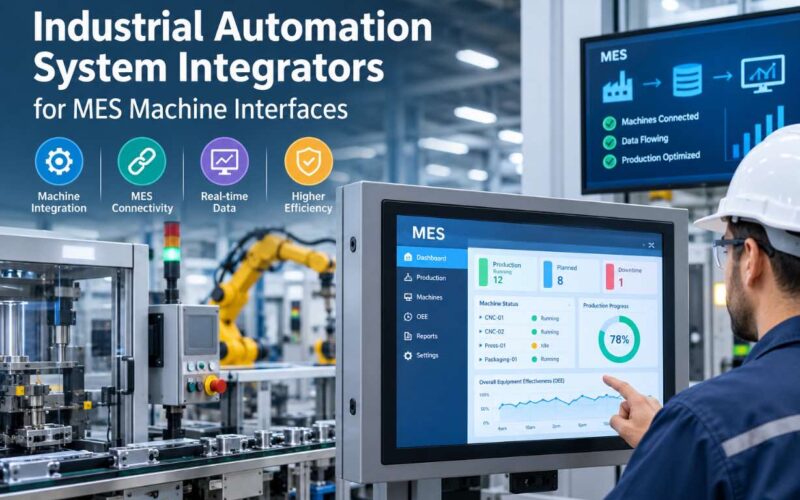
Modern factories frequently discover that tracking actual production metrics requires a direct, reliable link between shop floor machinery and higher-level business management systems. Manufacturing leadership often invests heavily in top-tier execution platforms only to discover that raw plant signals fail to populate operational dashboards as planned. Bridging that stubborn operational disconnect demands well-structured integrated control systems capable of translating split-second field device chatter into coherent business intelligence.
Why Your MES Rollout Stalled at the Machine Interface
Software developers understand databases, cloud storage, and enterprise schedules, yet physical machinery operates under entirely different rules dictated by scan cycles and microsecond electrical pulses. Factory engineers discover projects grind to a halt because standard enterprise connectors cannot interpret proprietary register addresses or erratic sensor tags without custom conversion logic. Production lines might register hundreds of micro-stops every shift, but unconfigured systems simply log these short interruptions as generic downtime or skip counting finished parts altogether. Misaligned communication layers between hardware sensors and administrative databases inevitably cause leadership to lose confidence in execution reporting before operators even finish learning the interface.
How Integrators Pull Clean PLC Data into an MES
Experienced industrial automation system integrators resolve signal discrepancies by organizing programmable controller tags into structured, meaningful data blocks before transmitting them upward. Controllers generate noisy, high-frequency status flags that easily overwhelm corporate servers if engineers attempt to pipe every mechanical transition directly into the enterprise database. Filtering out electrical chatter happens directly at the logic level, ensuring only validated states like completed cycles or confirmed alarm conditions trigger an outbound information packet.
Edge gateways and intermediate protocol converters sit between the field bus and the server room to translate native industrial dialects into open formats like MQTT. Standardized message broker payloads replace tangled point-to-point connections with decoupled publisher-subscriber architectures that scale effortlessly across multiple lines as production volume expands. Reliable communication pipelines ensure upper management sees ground truth from the floor while automation equipment continues executing its primary safety routines without latency interference.
Getting Older Plant Equipment to Talk Directly to MES
Vintage stamping presses, legacy packaging wrappers, and analog dial machines almost never provide convenient Ethernet ports or modern communication drivers for instant digital integration. Adding smart non-invasive sensors, clamp-on current transformers, and dedicated input-output blocks allows professional control integrators to track runtime and cycle states without modifying existing machine controls. Protocol conversion boxes extract serial streams from legacy controller cards, converting archaic proprietary serial strings into modern transmission standards that central servers ingest without friction. Smart retrofits breathe fresh diagnostic life into depreciated hardware, sparing companies major capital expenditure while closing stubborn information blind spots across the entire manufacturing facility.
What Integrators Look for in Machine-to-MES Setups
Qualified specialists survey the physical plant to evaluate network bandwidth, electrical noise isolation, and hardware processor utilization before designing a single communication path. Network latency between switches and machinery can ruin time-sensitive execution recipes if industrial communication lines share bandwidth with general office traffic. Stable communication backbones guarantee that operational commands travel back and forth without packet loss, dropped connections, or sudden production halts during high-volume production shifts.
Data integrity rules require consistent timestamp alignment so that scrap events align precisely with the exact part lot traveling down the conveyor belt. Timestamp variations of just three seconds can assign reject records to the wrong batch, destroying quality traceability during critical customer compliance audits. Robust architecture plans verify that local memory buffers hold data safely whenever corporate server maintenance temporarily interrupts plant-wide network connections.
How Integrators Wire Machine Handshakes into MES
Bidirectional communication requires strict handshaking routines so that both the machinery logic and the tracking database agree on who acts next during cycle execution. A certified integrator in control system design programs heartbeat pulses, acknowledgment flags, and timeout limits directly inside the controller routine to prevent execution deadlocks. Machine logic holds parts in place until the execution server sends an affirmative clear-to-proceed response, preventing defective components from advancing down the assembly line. Dropped handshakes trigger controlled local holds rather than abrupt mechanical stops, protecting expensive tooling and preserving total inventory tracking integrity across the shift.
Tying Legacy PLCs to Your MES Without Line Shutdowns
Upgrading running factory systems presents serious operational risk because unexpected downtime burns through production profits faster than almost any other technical mistake. Skilled industrial control systems companies avoid production stoppages by setting up parallel communication modules that listen to controller memory without altering core sequencing logic. Testing connections in simulated development environments verifies that scan times remain under acceptable thresholds before any engineer connects a live gateway cable to running equipment.
Secondary network interface cards allow external monitoring devices to read data tables directly through backplane messaging without halting main program execution. Isolating reporting networks from control networks ensures that high-volume information requests never starve physical machinery of required input-output scan cycles. Smooth rollouts keep line operators building products while digital transformation teams verify live data feeds from the comfort of the monitoring room.
Why In-House Teams Hire Integrators for MES Links
Building custom communication bridges between factory hardware and plant execution software demands specialized skills that internal maintenance technicians seldom have time to cultivate. Plant engineers focus primarily on keeping physical conveyors moving, hydraulic systems pressurized, and safety circuits fully operational across demanding round-the-clock shifts. Working with external automation specialists injects immediate field experience regarding diverse controller firmware, industrial protocols, and complex data exchange architectures. Organizations seeking dependable, production-tested connectivity between floor machinery and central software turn to RL Consulting to bridge complex shop-floor architectures with enterprise management systems.