





Artificial Intelligence (AI) is rapidly transforming investment management by enhancing traditional workflows and creating new standards of efficiency and insight. From data analysis to risk controls, AI-driven systems are helping firms remain agile in a competitive market. To learn more about practical applications and benefits, discover how AI-driven platforms are empowering teams from front to back office.
With AI tools now capable of parsing vast data streams and delivering actionable intelligence, investment professionals are better positioned than ever to understand market dynamics, reduce errors, and uncover new opportunities. Institutional adoption is accelerating, as investment managers seek to automate repetitive tasks and optimize portfolio returns. As these solutions mature, the trajectory of investment operations will continue to be shaped by the careful integration of AI technologies.
Enhancing Data Analysis
The introduction of AI algorithms is revolutionizing the ways firms approach market data. Instead of relying on manual research or limited analytics, AI tools can process massive quantities of structured and unstructured information in seconds. They can recognize patterns, spot market anomalies, and generate detailed projections using historical and real-time data. This allows analysts and managers to make decisions rooted in a more informed and complete data context, helping to reduce bias and improve consistency. Institutions leverage these insights to identify emerging market trends and forecast outcomes with greater confidence.
The continuous advancement of Natural Language Processing (NLP) means AI can now analyze alternative data such as news feeds, earnings calls, and social channels, providing new sources for investment signals and risk assessment. This level of data analysis was not feasible before AI, leading global firms to reexamine their competitive strategies. According to The Wall Street Journal, top hedge funds and asset managers are dedicating resources to train and refine machine learning models to maximize these insights across varied asset classes.
Algorithmic Trading
Algorithmic trading platforms depend on AI to automate executions with unmatched speed and precision. These platforms assess factors like price trends, liquidity, and even market sentiment, using this information to make rapid trading decisions. AI-powered algorithms can identify short-term inefficiencies, optimize order timing, and decrease market impact costs far beyond what was previously possible using only preset rules or human oversight. Today, the majority of volume in public equities and futures trading arises from algorithmic strategies, especially among large institutional players.
Machine learning models can adapt and evolve, responding to new information and shifting market conditions in real time. This adaptability enables continuous optimization of execution strategies and ongoing improvement against benchmarks. As regulatory and market microstructure shifts grow increasingly complex, AI-driven trading engines deliver critical flexibility to market participants.
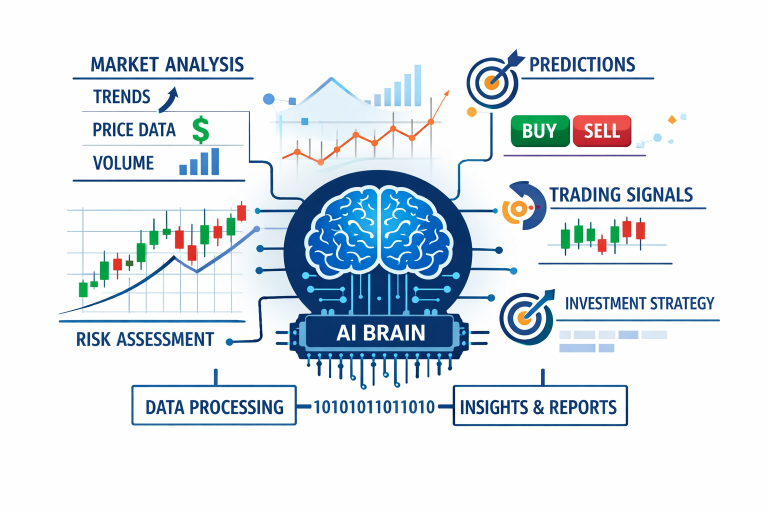
Risk Management and Fraud Detection
On the risk management front, AI excels at monitoring markets and portfolios for irregular activities and emerging threats. Machine learning is well-suited to detect patterns of fraud or manipulation, identifying subtle changes or anomalies that may escape even the most vigilant human supervisor. When applied to compliance, AI can scan millions of transactions to flag suspicious trades, giving compliance officers and auditors powerful new tools to maintain regulatory standards.
This approach not only reduces the incidence of illicit activities but also increases transparency and market integrity. Financial regulators and industry watchdogs are increasingly relying on AI-based surveillance, a trend outlined in reports by The Financial Times. Sophisticated risk models, harnessing expanding pools of real-time data, are being implemented both in-house by firms and by external monitoring agencies to ensure systemic stability.
Personalized Investment Strategies
For investors seeking tailored solutions, AI is the foundation of modern robo-advisors and digital wealth management platforms. These systems analyze each investor’s financial history, goals, and risk appetite to recommend optimal asset allocations automatically. Personalized portfolios can thus be created and managed quickly and cost-effectively, making high-quality investment services accessible to more individuals and smaller institutions. This level of personalization helps deepen trust and improve long-term outcomes for clients, whether they are retail investors or high-net-worth individuals.
Operational Efficiency
Beyond the investment front office, AI plays a critical role in streamlining operational workflows. From automating onboarding to handling regulatory documentation and data entry, AI dramatically lowers labor costs and decreases the likelihood of human error. Back office automation frees up staff for higher-order tasks and strategic projects, supporting firm-wide productivity advances and positioning organizations for scalable growth.
AI-driven document processing and workflow automation are being adopted by an increasing number of firms, enhancing not just routine data tasks but also more complex functions such as compliance reporting, reconciliation, and settlement. As a result, operations teams can now focus on value-added initiatives and innovation, instead of spending valuable hours on processes that can be efficiently delegated to technology. These efficiency gains, coupled with robust AI-powered analytics, form the backbone of future-ready investment management organizations.
Challenges and Considerations
The deployment of AI in investment management does not come without concerns. Algorithmic bias, data privacy, and transparency are ongoing issues requiring vigilant management. Models must be continuously monitored for unintended consequences, and institutions must adhere to evolving regulatory guidelines on AI use in finance. Developing explainable AI systems helps build trust with clients and regulators, ensuring accountability and ethical decision-making remain front and center.
Future Outlook
As AI technology continues to mature, further advancements are set to reshape the investment management landscape. Managers who embrace a strategic, ethical approach to AI integration will likely outperform their peers, gaining a technological edge alongside improved risk management and client outcomes. Success, however, will depend on balancing innovation with robust security frameworks and regulatory compliance. The industry’s future will be defined by firms that can harness AI’s power while upholding transparency and trust.
AI’s impact on investment management is already profound. As these technologies expand and evolve, their adoption will be crucial for firms aiming to remain relevant, efficient, and accountable in a changing global marketplace. In the coming years, collaboration between technology teams and investment professionals will be a defining factor in unlocking AI’s full potential, fostering organizations that are adaptable, resilient, and able to deliver exceptional value for clients in a digital-first era.