




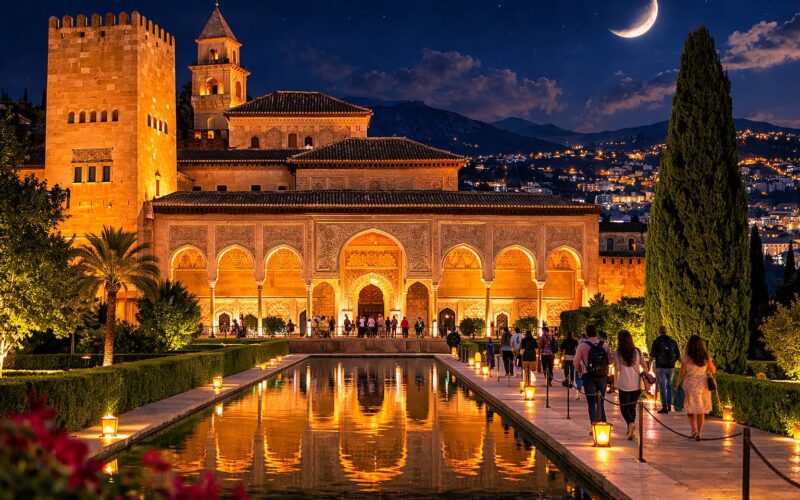
The Alhambra Palace in Granada, Spain is one of the most famous historical sites in the world. It is known for its beautiful Islamic architecture, gardens, fountains, and long history. Every year, millions of tourists visit the Alhambra to see its palaces and courtyards. Most people visit during the day. However, the Alhambra Palace night tour has become very popular in recent years. A night visit gives tourists a different and special experience. The palace is lit with soft lights, the crowds are smaller, and the atmosphere is calm and peaceful. Because of these features, the Alhambra night tour is considered a premium tourist activity. Even though fewer people attend night tours compared to daytime visits, the tours still generate strong revenue. This article explains the attendance, revenue sources, pricing strategy, and tourism impact of the Alhambra Palace night tour using simple language.
What Is the Alhambra Palace Night Tour?
The Alhambra night visit allows tourists to explore some areas of the palace complex in the evening. The monument is beautifully illuminated, which makes the architecture look even more impressive.
Unlike daytime tours, night visits focus on a quiet and relaxing environment.
Main Features of the Night Tour
-
Soft lighting across palace walls and courtyards
-
Smaller visitor groups
-
Peaceful atmosphere
-
Beautiful night views of Granada
-
A more exclusive visitor experience
Many tourists say that the Alhambra at night feels magical and very different from daytime visits.
Areas Visitors Can See During Night Tours
Visitors usually explore some of the most famous parts of the palace complex.
| Area | Description | Visitor Experience |
|---|---|---|
| Nasrid Palaces | Historic royal palace area | Beautiful Islamic design and carvings |
| Courtyards | Open spaces with fountains | Quiet and relaxing environment |
| Palace of Charles V | Renaissance palace building | Shows different architectural style |
| Scenic Viewpoints | Areas overlooking Granada | Great views of the city at night |
These locations make the Alhambra night experience memorable for many visitors.
Night Tour Attendance
The attendance for Alhambra night tours is smaller than daytime visits. This is done on purpose.
Authorities limit the number of visitors for several reasons:
-
To protect the historic buildings
-
To keep the environment calm and enjoyable
-
To prevent overcrowding
-
To preserve the monument for future generations
Because of these limits, only a certain number of people can visit the Alhambra at night.
Attendance Characteristics
-
Limited tickets available each evening
-
Smaller groups of visitors
-
High demand during tourist seasons
-
Often sold out in advance
Even though the number of visitors is lower, the value per visitor is higher, which helps increase revenue.
Why Tourists Choose the Night Tour
Many travelers choose the Alhambra Palace night tour for different reasons.
1. Quiet Environment
There are fewer visitors compared to daytime tours, which makes the visit more peaceful.
2. Special Atmosphere
The lighting at night makes the palace look very beautiful and dramatic.
3. Unique Travel Experience
Many tourists want to try something different from the usual daytime sightseeing.
4. Better Photography
The lights and reflections make great photos.
5. Alternative for Day Tickets
Sometimes daytime tickets sell out quickly, so night tours become another option.
Read also: Tubeseferi
Visitor Motivation Table
| Reason | Explanation |
|---|---|
| Peaceful experience | Smaller crowds |
| Unique atmosphere | Palace looks different at night |
| Photography | Beautiful lighting for pictures |
| Travel experience | Something special for tourists |
| Convenience | Good option when day tickets are unavailable |
Revenue Sources from Night Tours
The Alhambra night tour revenue comes from several sources.
Main Sources of Income
-
Night tour ticket sales
-
Guided tours with professional guides
-
Audio guide rentals
-
Private group tours
-
Tour packages sold by travel agencies
These different sources help increase the total revenue from night visits.
Revenue Components
| Revenue Source | Description | Importance |
|---|---|---|
| Ticket Sales | Entry tickets for night tours | Very important |
| Guided Tours | Guides explain the history | Medium importance |
| Audio Guides | Self-guided information | Medium importance |
| Private Tours | Small exclusive group tours | High value |
| Travel Packages | Combined tours and travel deals | Medium value |
This system helps create a strong tourism income model.
Pricing Strategy
The pricing strategy for Alhambra night tours is based on exclusivity. Since fewer visitors are allowed, tickets can be priced higher.
Pricing Features
-
Higher price compared to some daytime visits
-
Small group experience
-
Premium tourism activity
-
Strong demand from tourists
This strategy focuses on quality instead of quantity.
Day Tour vs Night Tour
The experience between day and night visits is quite different.
| Feature | Day Tour | Night Tour |
|---|---|---|
| Visitor Numbers | Large crowds | Smaller groups |
| Ticket Price | Standard price | Premium price |
| Atmosphere | Busy and active | Calm and peaceful |
| Photography | Bright daylight | Dramatic lighting |
| Experience | Traditional sightseeing | Exclusive experience |
This difference explains why the night tour can generate strong revenue even with fewer visitors.
Seasonal Trends
Tourism demand changes during different times of the year.
Peak Season
-
Spring and summer
-
Large number of tourists
-
High demand for night tours
Shoulder Season
-
Early spring and autumn
-
Moderate number of visitors
Off-Season
-
Winter months
-
Lower tourist numbers
Seasonal Demand Table
| Season | Attendance | Revenue Impact |
|---|---|---|
| Spring | High | Good revenue |
| Summer | Very high | Strong revenue |
| Autumn | Moderate | Stable revenue |
| Winter | Lower | Reduced demand |
Seasonal trends affect both attendance and revenue levels.
Operational Costs
Running night tours requires careful planning and resources.
Main Costs
-
Lighting systems for the palace
-
Security staff
-
Maintenance of historic structures
-
Tour staff and management
-
Preservation work
These costs help maintain the safety and conservation of the monument.
Economic Impact on Granada
The Alhambra night tour also helps the local economy.
Tourists who visit at night often spend money in the city before or after the tour.
Economic Benefits
-
Hotel stays
-
Restaurants and cafés
-
Transportation services
-
Souvenir shops
-
Cultural events
Local Economic Impact Table
| Sector | Benefit |
|---|---|
| Hotels | More overnight visitors |
| Restaurants | More evening customers |
| Transport | Taxi and bus services |
| Retail | Souvenir and craft sales |
| Culture | More tourism activities |
Night tourism helps extend economic activity in Granada during evening hours.
Challenges of Night Tourism
Despite its success, the Alhambra night tour faces some challenges.
Major Challenges
-
Protecting historic buildings
-
Managing high demand for tickets
-
Keeping the experience peaceful
-
Controlling visitor numbers
-
Covering operational costs
Authorities must balance tourism growth and monument preservation.
Sustainability Measures
To protect the Alhambra, several strategies are used.
Preservation Strategies
-
Strict visitor limits
-
Timed ticket entry
-
Conservation programs
-
Careful visitor management
-
Continuous maintenance work
These steps ensure the long-term protection of the Alhambra Palace.
Conclusion
The Alhambra Palace night tour offers a unique and memorable experience for visitors. Although fewer people attend night tours compared to daytime visits, the experience generates strong revenue through premium pricing and exclusive access.
Important points include:
-
Night tours focus on quality rather than large crowds
-
Limited capacity helps protect the historic site
-
Multiple revenue sources support tourism income
-
Seasonal trends influence visitor demand
-
The tours benefit Granada’s local economy
By carefully managing visitor numbers and protecting the monument, the Alhambra night tour can continue to attract tourists while preserving one of Spain’s most important cultural treasures.