




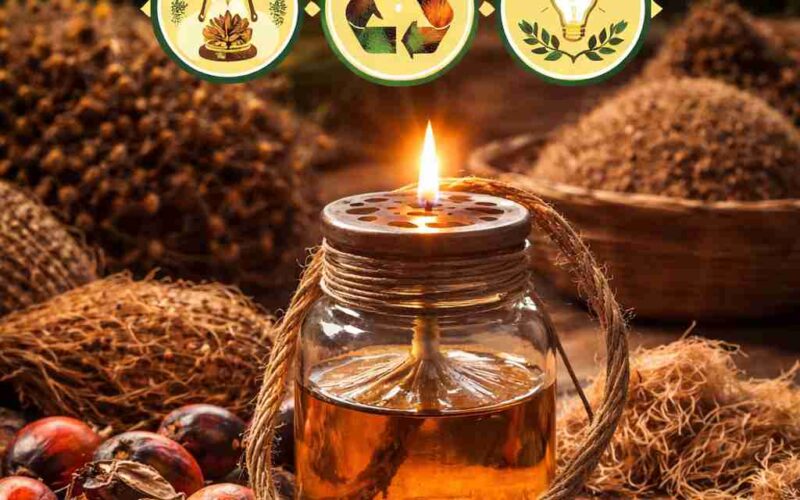
The oil palm lamp project is an idea that uses waste from oil palm farming to make lamps or lighting systems. Oil palm trees are grown in many tropical countries. They produce palm oil, which is used in food, cosmetics, and many other products. However, the process of making palm oil also produces a large amount of agricultural waste.
Instead of throwing away this waste or burning it, the oil palm lamp project suggests using it to create lamps. These lamps can help provide light for homes, streets, and communities, especially in rural areas where electricity is not always available.
This project is important because it helps solve two problems at the same time:
-
Too much agricultural waste
-
Lack of affordable lighting in some communities
By turning palm waste into lighting, the project supports environmental protection, community development, and sustainable energy.
1. Background of the Oil Palm Lamp Project
Oil palm farming produces a lot of leftover materials after the oil is extracted from the fruit. These materials are often not used and may become waste.
Common problems related to palm waste include:
-
Waste piling up near palm oil factories
-
Air pollution caused by burning waste
-
Poor waste management in farming areas
At the same time, many rural communities still do not have stable electricity. Some families depend on simple lighting sources such as:
-
Candles
-
Kerosene lamps
-
Small battery lights
These lighting options can be expensive and sometimes unsafe. The oil palm lamp project tries to solve this problem by using local resources to create simple and affordable lighting.
2. Idea of the Oil Palm Lamp Project
The main idea of the project is simple: use oil palm waste to produce lamps or energy for lighting.
The process usually includes these steps:
-
Collect waste from oil palm plantations or mills.
-
Process the waste so it can be used as fuel or lamp material.
-
Build simple lamps using these materials.
-
Use the lamps in homes or public areas.
Because the materials come from local farms, the lamps can often be produced locally and at a lower cost.
3. Materials Used in Oil Palm Lamps
Different parts of the oil palm plant can be used in this project.
| Palm Material | Description | How It Is Used |
|---|---|---|
| Palm Shells | Hard outer covering of the fruit | Can be used as fuel |
| Palm Fibers | Fibers left after oil extraction | Used as biomass fuel |
| Empty Fruit Bunches | Leftover bunch after fruit removal | Used for energy or materials |
| Palm Oil | Oil extracted from fruit | Used as lamp fuel |
| Palm Biomass | Mixture of plant residues | Used for energy production |
These materials are often available in large amounts in palm oil producing areas.
4. How the Oil Palm Lamp Project Works
The project usually follows several basic steps.
Step 1: Collecting Waste
Palm waste is collected from:
-
Palm oil factories
-
Plantations
-
Processing centers
Step 2: Processing the Waste
The waste may be processed in different ways such as:
-
Drying the materials
-
Turning them into fuel
-
Converting them into biomass energy
Step 3: Making the Lamps
The lamp is then built using simple parts such as:
-
A fuel container
-
A wick or burner
-
A protective cover
-
Sometimes an LED light
Step 4: Using the Lamps
The lamps can be used in many places including:
-
Houses
-
Schools
-
Community centers
-
Streets and pathways
Step 5: Maintenance
People in the community are taught how to:
-
Refill the fuel
-
Clean the lamp
-
Replace parts when needed
Read also: Sunrise Learning Channel
5. Goals of the Oil Palm Lamp Project
The oil palm lamp project has several important goals.
Environmental Goals
-
Reduce agricultural waste
-
Use renewable resources
-
Reduce pollution from burning waste
-
Provide better lighting for rural communities
-
Improve safety at night
-
Help students study after dark
Economic Goals
-
Create new jobs
-
Increase income for farmers
-
Reduce the cost of lighting for families
6. Environmental Benefits
Using oil palm waste for lamps can help protect the environment.
Main Environmental Benefits
-
Less waste from palm oil production
-
Reduced air pollution from burning waste
-
Better use of natural resources
-
Lower use of fossil fuels
Environmental Comparison
| Factor | Traditional Waste Disposal | Oil Palm Lamp Project |
|---|---|---|
| Waste Handling | Waste often burned | Waste reused |
| Air Pollution | High | Lower |
| Resource Use | Poor | More efficient |
| Sustainability | Limited | Improved |
This project helps support a cleaner and more sustainable environment.
Lighting is very important for daily life. Many activities depend on good lighting.
Benefits for Communities
-
Children can study at night
-
People can work longer hours
-
Streets become safer after dark
-
Families can do household tasks more easily
| Social Area | Benefit |
|---|---|
| Education | Students can read and study at night |
| Safety | Better lighting reduces accidents |
| Community Life | More evening activities |
| Health | Less smoke compared to kerosene lamps |
Good lighting can improve the quality of life in rural communities.
8. Economic Benefits
The oil palm lamp project can also create economic opportunities.
Possible Jobs Created
-
Collecting palm waste
-
Processing biomass materials
-
Making lamps
-
Repairing and maintaining lamps
-
Selling lamps in local markets
Economic Benefits Table
| Group | Benefit |
|---|---|
| Farmers | Can sell waste materials |
| Workers | New job opportunities |
| Small Businesses | Chance to produce and sell lamps |
| Families | Lower cost for lighting |
Turning waste into useful products can help strengthen the local economy.
9. Design and Implementation
When creating oil palm lamps, the design should be simple and practical.
Important Design Features
-
Easy to use
-
Low cost
-
Strong and durable
-
Easy to repair
Things Needed for Implementation
-
Supply of palm waste
-
Basic tools and equipment
-
Training for local workers
-
Community support
Community participation is very important for the success of the project.
10. Safety Considerations
Safety must always be considered when using lamps that involve fuel.
Safety Features
-
Stable lamp base
-
Safe fuel storage
-
Strong materials
-
Good ventilation
Safety Tips for Users
-
Do not overfill the fuel container
-
Keep the lamp away from flammable objects
-
Clean the lamp regularly
-
Follow instructions carefully
These steps help reduce accidents and make the lamps safer to use.
11. Challenges of the Project
Although the oil palm lamp project has many benefits, it also has some challenges.
Main Challenges
-
Palm waste supply may change during the year
-
Some areas may not have processing equipment
-
Communities may need training to use the technology
-
The lamps may not produce as much light as electric systems
Project Limitations
| Challenge | Explanation |
|---|---|
| Waste Supply | Depends on farming seasons |
| Technology | Some designs need special tools |
| Awareness | People may need training |
| Lighting Power | May not replace full electric lighting |
These challenges can be solved with better planning and support.
12. Future Opportunities
The oil palm lamp project may grow and improve in the future.
Possible Improvements
-
Using LED lights to save energy
-
Combining solar power with palm fuel
-
Creating street lighting systems
-
Developing community energy projects
Future Possibilities Table
| Innovation | Benefit |
|---|---|
| LED Lighting | Brighter and more efficient |
| Hybrid Energy | More reliable lighting |
| Smart Lighting | Automatic control systems |
| Community Projects | Larger lighting networks |
With new technology, the project could help many more communities.
Conclusion
The oil palm lamp project is a creative way to use agricultural waste for a useful purpose. By turning palm waste into lighting systems, the project helps reduce environmental pollution while providing affordable light for rural communities. This idea supports sustainable development by improving waste management, creating economic opportunities, and helping people access better lighting. Although there are some challenges, the project has strong potential for growth. With continued innovation and community involvement, oil palm lamp projects can become an important solution for clean energy, rural development, and environmental protection.