




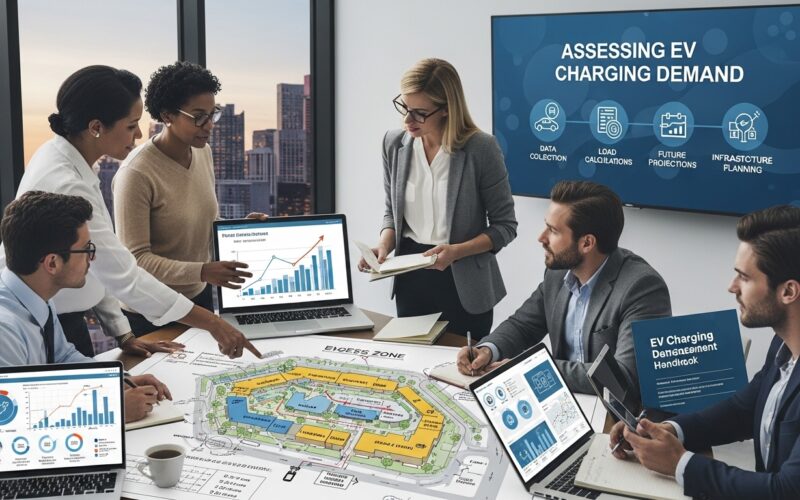
As electric vehicles (EVs) gain popularity, property owners are increasingly focused on the benefits of installing reliable EV charging stations. As EV technology advances and consumer preferences shift toward cleaner modes of transportation, having an EV charging infrastructure in place is no longer just a perk; it’s quickly becoming an expected amenity for modern properties. Accurately assessing the demand for these installations is essential for making sound investment decisions that serve the needs of tenants, employees, or customers. Introducing solutions like Blink’s commercial charging can offer a competitive advantage and demonstrate commitment to sustainability by directly addressing the growing expectations for green initiatives and smart property management.
Before moving forward, it is essential to determine the likely usage, preferred charging types, and expectations for available infrastructure. This initial planning stage involves more than just estimating how many vehicles might use the chargers; it requires delving into user habits, future growth trends, and even neighborhood demographic shifts. Addressing these questions will position your property as a future-ready location and maximize both investment returns and user satisfaction. By approaching EV charging thoughtfully, property owners can avoid common pitfalls such as underutilized equipment or insufficient chargers to meet growing demand, ultimately ensuring the infrastructure matches actual needs and supports wider sustainability goals, while potentially increasing property value.
Conduct a Resident or Employee Survey
One of the first and most effective ways to discern EV charging demand is by reaching out to your core audience: the people who live or work at your property. Designing a brief yet comprehensive survey can reveal not only the percentage of current EV owners on your property, but also those considering the switch in the near future. The National Association of Home Builders found that interest in EV charging stations among property buyers has soared in recent years, jumping from 23 percent to 49 percent in just a decade, reflecting the increasing presence of EVs in everyday life. Understanding this trend at the local level allows property owners to appropriately plan for future demand, anticipate growth, and market their property more effectively.
Surveys can also clarify which charging types are preferred (such as Level 2 high-speed chargers versus Level 1 standard chargers), common parking habits, and the timeframes when charging is most often used, whether residents tend to charge overnight or employees charge during work hours, for example. Additionally, surveys can collect valuable insights into potential locations, willingness to pay for charging services, and perceived barriers to EV adoption. This information is invaluable when selecting charging equipment, allocating installation budgets, and planning charger locations that are both convenient and accessible to those who need them most. Engaging directly with users through surveys ensures you prioritize real preferences and boost satisfaction when the system is live.
Analyze Local EV Adoption Rates
The next step is to research the number and growth rate of EV registrations in your municipality or region. High local adoption rates signal a greater imminent need for flexible and accessible charging options, and in high-growth regions, this need can materialize surprisingly quickly. Tools such as the California Energy Commission’s Data Exploration Tools allow property owners to view EV adoption trends down to the neighborhood level, revealing pockets of high demand and highlighting areas where growth is lagging.
By comparing these trends with broader national statistics in major publications such as The New York Times, property owners can gauge whether their area is ahead of or behind the curve and plan accordingly. If your area has a high rate of EV adoption, getting ahead of the curve with adequate charging infrastructure could make your property significantly more attractive to tenants or customers who already drive electric or are considering a switch. Staying aware of adoption patterns helps you avoid both overbuilding and underproviding infrastructure, ultimately enabling more efficient, cost-effective planning and ensuring better long-term returns on your investment.
Evaluate Nearby Charging Infrastructure
A thorough assessment of your community’s existing EV charging infrastructure will help identify gaps, potential competitors, or oversaturation. Even cities with robust EV programs, like Los Angeles, still experience “charging deserts” where access is limited or nonexistent, often because publicly available chargers are clustered in certain commercial districts and are rare in residential or mixed-use areas.
Evaluate public maps of charging stations and note their locations, types, and user reviews. Are there issues with availability? Are chargers often reported as broken or crowded? Checking platforms such as the U.S. Department of Energy’s Alternative Fuels Data Center helps ensure you have an accurate, up-to-date picture of current infrastructure. If there are few available charging locations within a reasonable walking distance—or if nearby chargers are frequently in use or unreliable, this presents an opportunity for property owners to add significant value by installing new chargers that are better maintained or more conveniently located. Furthermore, this information will help position your charging stations as a competitive amenity that addresses real user pain points.
Consider Property Type and Usage
The specific nature of your property plays a pivotal role in assessing EV charging demand. Multifamily residential complexes, for instance, will typically require shared charging stations accessible to all tenants. At the same time, retail centers might focus on short-duration charging suitable for customers shopping or dining onsite. Office buildings or employment centers should consider daytime charging for employees whose cars will sit in the lot for extended periods, making Level 2 charging optimal.
For hospitality properties, such as hotels, investing in high-speed chargers can appeal to out-of-town guests and travelers, making your business a gateway to EV tourism. Careful evaluation prevents costly miscalculations, such as installing too many fast chargers in a low-demand area or too few in a high-density residential area. For commercial landlords, understanding the patterns of both customer and employee visits helps design charging layouts and determine quantities. At the same time, multifamily property managers can avoid bottlenecks and meet future demand by opting for scalable solutions that enable easy expansion.
Assess Electrical Capacity
No EV charging project is complete without a comprehensive review of your property’s electrical system. Determining whether existing electrical capacity can safely support new charging load is not only a technical matter; it can directly impact installation feasibility, overall cost, and timeline. The U.S. Department of Energy offers useful guidelines for site assessments and the design of electric vehicle supply equipment (EVSE), helping property owners make informed decisions about upgrades or infrastructure needs.
Partnering with a qualified electrician or electrical engineer to perform a load study ensures any technical limitations are addressed early in the planning process, avoiding disruptions and costly retrofits later. Considering options like “smart” charging systems that modulate power use can also help properties with limited electrical capacity meet charging demand without expensive upgrades, enabling a phased approach to installation that aligns with current demand and infrastructure realities. This technical groundwork ensures your investment is future-proofed and compliant with regulations and local building codes.
Monitor and Adapt
Following installation, the demand assessment process continues. Regularly monitor charger usage, collect feedback, and adjust policies as needed, such as introducing reservation systems, time-of-use pricing, or expanding charger availability if usage is consistently high. Usage patterns can reveal whether your initial estimates were accurate or if scaling up or down makes sense for your unique property. Open channels for feedback empower users and help you address minor issues quickly before they escalate into bigger problems, enhancing the user experience and retention.
Continuous monitoring and engagement make your investment more resilient to shifts in technology, changing EV trends, or evolving user expectations. This proactive approach helps ensure your EV charging stations remain a valuable asset well into the future, supporting both operational flexibility and the evolution of transportation habits in your area. By demonstrating responsiveness to user feedback and staying attuned to new trends, you can maximize the effectiveness of your EV charging investment and reinforce your reputation as an innovative property leader.
Final Thoughts
Assessing demand for EV charging at your property is a strategic process that blends community engagement, data analysis, infrastructure review, and technical evaluation. By thoughtfully following each of these steps, property owners can create EV charging infrastructure that delivers long-term value, supports tenant and customer needs, and helps promote sustainable transportation solutions for years to come. This approach not only supports the transition to greener mobility but also reflects a responsive, forward-thinking management style that sets your property apart in a competitive market.