




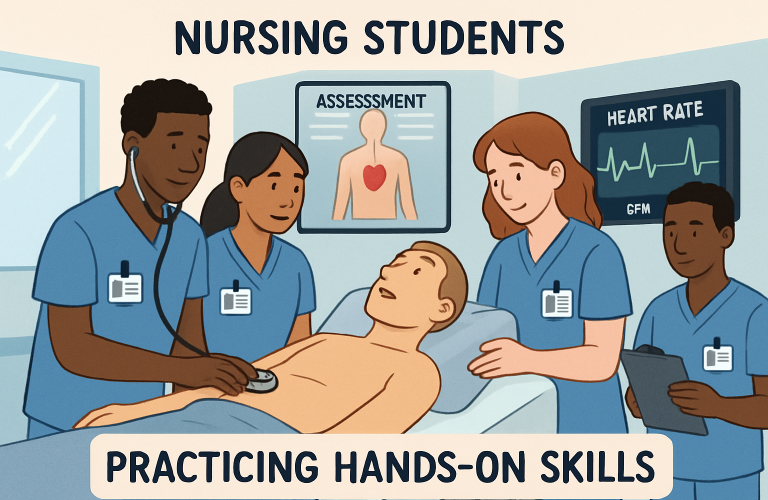
Nurse education is experiencing a remarkable evolution, driven by the urgency to adapt to the complexities of today’s healthcare environment. Progressive teaching strategies and cutting-edge technologies are transforming the way future nurses acquire essential skills and knowledge. Aspiring educators seeking to make a difference can benefit from advancing their expertise through online nurse educator programs, which seamlessly integrate these innovative approaches.
New educational methods emphasize experiential learning, engagement, and flexibility to help students deepen their clinical skills and build confidence. By fostering a dynamic and interactive educational landscape, modern nurse education better prepares students for real-world challenges, emphasizing critical thinking, adaptability, and compassionate care.
Hospitals, academic institutions, and healthcare systems are increasingly recognizing the value of harnessing state-of-the-art technology, shifting away from the traditional classroom model, and training students for emerging care environments. These trends not only meet the demands of diverse learners but also align with the healthcare industry’s push for quality improvement and patient safety.
Simulation-Based Learning
Simulation-based learning represents a paradigm shift in nurse education, emphasizing experiential learning via sophisticated simulations of clinical scenarios. High-fidelity mannequins, virtual patients, and immersive simulation labs allow nursing students to practice assessments, interventions, and communication skills in lifelike contexts. These controlled settings enable students to safely make mistakes, refine their judgments, and learn from feedback, ultimately contributing to improved patient safety and confidence.
For example, a simulation might recreate a patient suffering from cardiac arrest. Students must act quickly—assessing the scenario, administering care, and collaborating with their team—all within a safe environment. The debriefing process is equally vital, as it enables reflection, discussion, and consolidation of knowledge. According to research published by the American Association of Colleges of Nursing (AACN), simulation-based learning consistently results in higher student satisfaction and demonstrates measurable improvements in clinical competency.
Flipped Classroom Model
The flipped classroom model offers a student-centric alternative to traditional, lecturer-led instruction. Instead of passively absorbing information in class, students first encounter foundational content at home through video lectures, readings, or online modules. Live class time is then devoted to discussion, collaborative exercises, and hands-on practice guided by instructors. This interactive approach enhances engagement and fosters a deeper exploration of clinical and theoretical concepts.
Research highlights that the flipped model enhances information retention, meets diverse learning needs, and cultivates collaboration among peers. In nurse education, where critical thinking and quick decision-making are paramount, the flipped classroom equips students to apply knowledge more effectively during clinical rotations.
Online Learning Platforms and Virtual Labs
Online learning platforms have dramatically increased the accessibility and personalization of nurse education. Through these platforms, students can access lectures, resources, discussion boards, and assessments at any time and from anywhere. Central to this innovation is the use of virtual labs—interactive, web-based environments where students can practice technical skills and simulate patient care procedures.
Virtual labs present realistic scenarios, such as performing intramuscular injections or responding to emergency codes, allowing students to practice and master competencies in a low-risk, supportive setting. Interactive learning modules reinforce core concepts and support students in visualizing, analyzing, and solving complex healthcare problems. The ability to replay scenarios or review feedback fosters independent learning and resilience.
Artificial Intelligence and Big Data
Artificial intelligence (AI) and big data are at the forefront of transformative change in nurse education. AI-powered assessments enable educators to track student progress with pinpoint accuracy, offering feedback tailored to individual strengths and weaknesses. Intelligent tutoring systems, adaptive quizzes, and learning analytics ensure students stay engaged while addressing their specific learning gaps.
Moreover, the integration of AI into simulation technology sets new standards for realism in clinical training. AI can animate virtual patients’ vital signs, facilitate complex clinical conversations, and dynamically adapt scenarios based on learners’ actions, providing unparalleled opportunities to develop critical thinking and clinical judgment. The use of big data in curriculum design and assessment also enables educational institutions to identify trends, anticipate needs, and continually improve academic outcomes.
Telehealth Training
With the rapid expansion of digital healthcare, telehealth expertise has become increasingly essential for modern nurses. Telehealth training develops practical skills in conducting virtual visits, performing remote assessments, managing secure digital records, and delivering patient education through technology platforms. Educational curricula now feature simulated telemedicine interactions, ensuring students grow comfortable providing effective care in virtual settings.
This training addresses regulatory, privacy, and ethical considerations unique to telehealth, preparing future nurses to overcome barriers such as distance, access, and resource scarcity. As healthcare extends beyond traditional clinical spaces, nurses equipped with telehealth competencies can provide patient-centered care regardless of location.
Conclusion
Innovative teaching strategies and the embrace of new technology are reshaping the landscape of nurse education. Simulation-based learning, flipped classrooms, online platforms, AI-driven assessments, and telehealth training each represent forward-thinking efforts to equip nurses with the aptitude and agility demanded by the modern healthcare system. As nursing educators and students adapt to these advances, the outcome is a more prepared, empowered, and resourceful nursing workforce suited for lifelong learning and exceptional patient care.