



Dorsalgia is the medical word for back pain. The word comes from Latin and simply means “pain in the back.” Doctors use this term in medical records, but most people just say back pain. Back pain is very common. Almost everyone feels it at some time in life. It can be mild and go away in a few days, or it can last longer and cause daily problems. The good news is that most back pain gets better with simple care. This article explains dorsalgia in clear and simple language.
What Is Dorsalgia?
Dorsalgia means pain anywhere along your spine (backbone). Your spine has different parts.
| Part of Spine | Location | Common Pain |
|---|---|---|
| Cervical spine | Neck | Neck pain and stiffness |
| Thoracic spine | Middle back | Aching or posture pain |
| Lumbar spine | Lower back | Most common back pain |
| Sacral area | Bottom of spine | Pain near hips or tailbone |
Back pain can be:
-
Acute – short-term pain
-
Chronic – long-lasting pain
-
Specific – caused by a clear problem
-
Non-specific – no exact cause found (very common)
Types of Dorsalgia
1. Based on Location
-
Neck pain
-
Middle back pain
-
Lower back pain
-
Pain near the hips or tailbone
2. Based on Time
| Type | How Long It Lasts |
|---|---|
| Acute | Less than 6 weeks |
| Subacute | 6 to 12 weeks |
| Chronic | More than 12 weeks |
3. Based on Cause
-
Muscle pain
-
Joint pain
-
Nerve pain
-
Pain from other organs
Read also: How Oncology Research Leads to Life-Saving Therapies
Causes of Dorsalgia
There are many reasons why back pain happens.
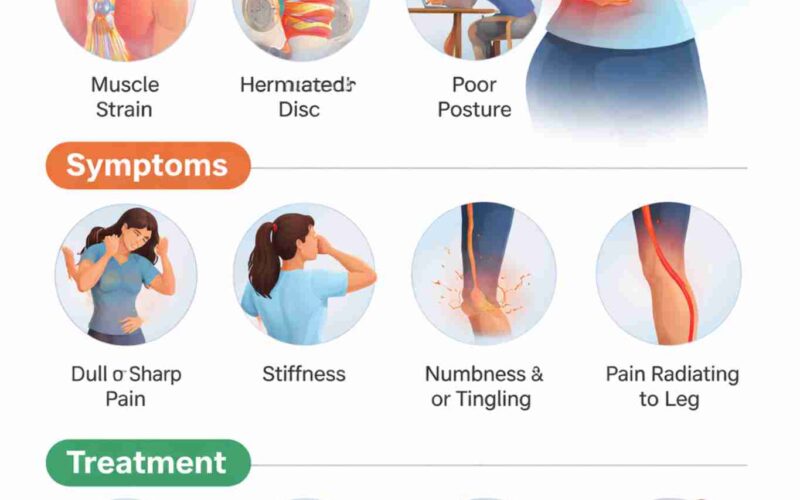
1. Muscle and Strain Problems (Most Common)
-
Lifting heavy objects the wrong way
-
Poor posture
-
Sitting too long
-
Sudden movement
-
Weak back or stomach muscles
2. Spine Problems
-
Slipped or herniated disc
-
Worn-out discs
-
Narrow spine space (spinal stenosis)
-
Arthritis in the spine
3. Nerve Problems
-
Sciatica (pain going down the leg)
-
Pinched nerve
4. Other Health Problems
-
Kidney infection
-
Weak bones (osteoporosis)
-
Infection in the spine
-
Rarely, tumors
-
Lung problems (can cause middle back pain)
Symptoms of Dorsalgia
Back pain feels different for each person.
Common Symptoms
-
Dull ache
-
Sharp pain
-
Burning feeling
-
Tight muscles
-
Stiffness
-
Pain that gets worse when moving
-
Pain going to arms or legs
-
Tingling or numbness
-
Weakness
Warning Signs (See a Doctor Quickly)
| Symptom | Why It Is Serious |
|---|---|
| Fever with back pain | Could be infection |
| Sudden weight loss | May be serious illness |
| Loss of bladder control | Nerve problem |
| Severe injury | Possible fracture |
| Weakness in legs | Nerve damage |
If you have these signs, get medical help right away.
How Doctors Diagnose Dorsalgia
Most back pain does not need many tests.
Doctors usually:
-
Ask about your pain
-
Do a physical exam
They may ask:
-
When did the pain start?
-
What makes it worse?
-
Did you lift something heavy?
-
Do you feel numbness or weakness?
Tests That May Be Used
| Test | Why It Is Done |
|---|---|
| X-ray | Check bones |
| MRI | Check discs and nerves |
| CT scan | Detailed bone image |
| Blood test | Check for infection |
| Nerve test | Check nerve damage |
Many people do not need these tests unless pain is serious or long-lasting.
Treatment of Dorsalgia
Most back pain gets better without surgery.
1. Simple Treatments (First Step)
-
Short rest (not too long)
-
Light activity
-
Physical therapy
-
Stretching exercises
-
Heat for tight muscles
-
Ice for swelling
-
Massage
-
Better posture
-
Better chair and desk setup
Staying active is usually better than lying in bed for many days.
2. Medicines
| Medicine | What It Does |
|---|---|
| Pain relievers (NSAIDs) | Reduce pain and swelling |
| Muscle relaxers | Relax tight muscles |
| Creams | Local pain relief |
| Nerve pain medicine | Help nerve pain |
Always take medicine as your doctor tells you.
3. Other Treatments
If pain does not improve:
-
Steroid injections
-
Dry needling
-
Chiropractic care
-
Pain clinic treatments
4. Surgery (Rare Cases)
Surgery may be needed if:
-
A nerve is badly compressed
-
There is serious weakness
-
Pain does not improve after many months
-
There is serious spine damage
Most people do not need surgery.
Home Care Tips
You can help your back heal with simple habits.
Helpful Tips
-
Sit and stand straight
-
Do daily stretching
-
Strengthen stomach and back muscles
-
Walk regularly
-
Keep healthy body weight
-
Sleep on a supportive mattress
-
Avoid sitting too long
Small changes can make a big difference.
How to Prevent Dorsalgia
You cannot prevent all back pain, but you can lower your risk.
Prevention Checklist
-
✔ Lift objects by bending knees, not your back
-
✔ Do not sit for many hours without breaks
-
✔ Exercise regularly
-
✔ Keep strong core muscles
-
✔ Maintain healthy weight
-
✔ Use a good office chair
-
✔ Wear supportive shoes
Dorsalgia vs Other Problems
| Condition | How It Is Different |
|---|---|
| Sciatica | Pain travels down one leg |
| Kidney pain | Often with fever or urine problems |
| Arthritis | Joint stiffness and swelling |
| Muscle strain | Usually after lifting or sudden movement |
Getting the right diagnosis is important.
When to See a Doctor
See a doctor if:
-
Pain lasts more than 2 to 4 weeks
-
Pain gets worse
-
You feel numbness or weakness
-
Pain spreads to arms or legs
-
You have warning signs
Early treatment helps faster recovery.
Recovery and Outlook
Most acute back pain improves within a few weeks.
| Type | Recovery Time |
|---|---|
| Mild strain | Few days to weeks |
| Moderate pain | Several weeks |
| Chronic pain | Needs long-term care |
Your recovery depends on:
-
Your age
-
Your activity level
-
Your weight
-
Your overall health
With good care and healthy habits, most people feel better and return to normal activities.
Conclusion
Dorsalgia simply means back pain. It is very common and usually not serious. Most cases happen because of muscle strain, poor posture, or daily activities. The good news is that most back pain improves with simple treatments like exercise, stretching, good posture, and short-term medicine. However, serious symptoms should never be ignored. Taking care of your back every day is the best way to prevent future pain and stay healthy.